Short answer: We do not yet have enough direct human research to say how tobacco-free nicotine pouches affect sperm health or the chances of conceiving. Studies of tobacco-containing snus and laboratory research on nicotine raise questions, but they cannot tell us the precise risk from pouches.
If you use nicotine pouches and are planning a family, the uncertainty is worth discussing with a healthcare professional. Tobacco-free does not mean nicotine-free, and an absence of research does not establish safety.
Nicotine pouches and snus: what is the difference?
Nicotine pouches are small sachets placed between the lip and gum. They deliver nicotine through the lining of the mouth without burning tobacco.
Although the terms are sometimes used interchangeably, tobacco-free nicotine pouches and traditional Swedish snus are different products:
| Product | Contains tobacco leaf? | How nicotine is delivered |
|---|---|---|
| Tobacco-free nicotine pouches | No | Absorbed through the lining of the mouth |
| Traditional Swedish snus | Yes | Absorbed through the lining of the mouth |
| Cigarettes | Yes | Inhaled in tobacco smoke |
This distinction matters when reading fertility claims. A study involving snus users is not automatically a study of nicotine pouches. Cigarette research also involves exposure to combustion products alongside nicotine.
Pouches can still deliver substantial amounts of nicotine. The German Federal Institute for Risk Assessment reported that some products produced nicotine blood levels comparable with cigarettes, while high-dose products produced higher levels in the studies assessed. That finding concerns nicotine exposure; it does not establish a fertility effect.
What have human studies found?
One frequently cited Swedish study published in 2022 investigated reproductive health in 613 men. After adjustments, including for cigarette smoking and abstinence time, snuff users had a total sperm count approximately 24% lower than non-users.
That deserves attention, but several qualifications matter:
- The men used tobacco-containing snuff, rather than modern tobacco-free nicotine pouches.
- The study was observational, so it could not prove that snuff caused the difference.
- The percentage describes a difference between groups, not a measured decline after individual men started using the product.
- It did not establish a corresponding reduction in pregnancies.
The findings are also not consistent across studies. A Danish population study published in 2020 found no association between snuff use and the markers of testicular function it assessed.
Together, these studies leave uncertainty about snus. They provide even less certainty about tobacco-free pouches.
It is also useful to distinguish total sperm count from other measurements. Sperm concentration, progressive motility and semen volume answer different questions. Our guide to progressive motile sperm count (PMSC) explains how those measurements fit together.
Could nicotine itself affect sperm?
Laboratory research suggests that nicotine can affect sperm under certain experimental conditions.
In a study using sperm samples from 12 donors, researchers exposed sperm directly to different nicotine concentrations. At some concentrations and exposure durations, they observed reduced movement and viability.
This provides a reason to investigate nicotine further. However, exposing sperm directly in a laboratory does not reproduce nicotine absorption, metabolism or exposure in someone using pouches.
We cannot use those results to calculate how many pouches would affect sperm, identify a safe strength or predict an individual man’s fertility.
What should you do if you use pouches and are trying for a baby?
A useful first step is to include nicotine pouches in any discussion about your reproductive health. Tell your GP or fertility clinician which products you use, their labelled strength, how frequently you use them and whether you also smoke or vape.
There is no established fertility-safe number of pouches per day. Equally, current evidence does not justify telling every pouch user that they have damaged their sperm.
If you want to stop, ask a pharmacist, GP or stop-smoking adviser for support, particularly if pouches have replaced cigarettes.
The NHS explains that nicotine pouches are not licensed stop-smoking products in the UK. Established nicotine replacement therapies, such as patches and gum, have a different evidence base and role in smoking cessation. Concerns about fertility should not prompt a return to cigarettes or abandoning effective cessation support.
You can also review the wider picture using our evidence-based guide to preparing for fatherhood.
Can a sperm test show whether nicotine pouches are affecting you?
A sperm test can provide information about selected semen parameters. It cannot establish that nicotine pouches caused a particular result.
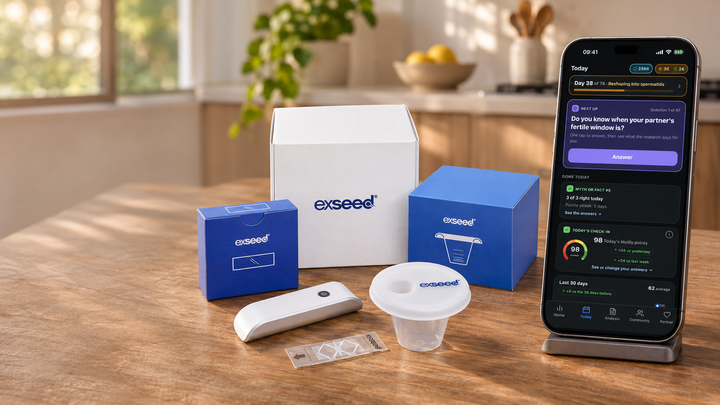
The ExSeed Home Sperm Test assesses sperm concentration, progressive motility and semen volume, and calculates progressive motile sperm count. It does not assess every aspect of sperm health or confirm that you are fertile or infertile.
A reassuring result cannot prove that continued pouch use is safe. A lower result also needs interpretation in context, rather than automatically being attributed to nicotine.
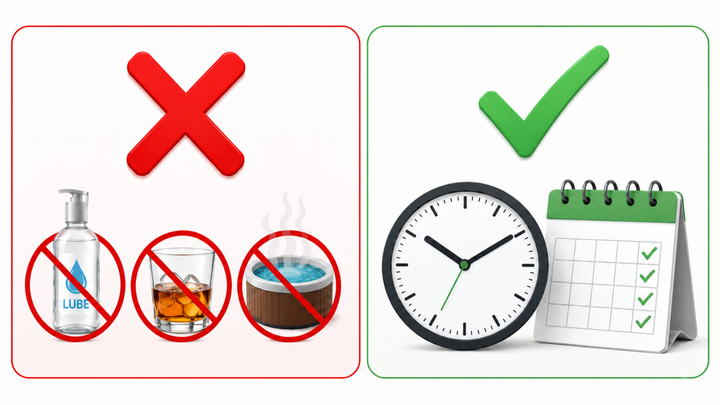
Results can vary because of collection conditions, abstinence time, recent illness and natural biological variation. Read why sperm test results differ between tests and follow the instructions in our sperm test preparation guide.
If you receive an unexpected result or are struggling to conceive, discuss appropriate clinical assessment. Our guide to male fertility testing options explains what different tests can tell you.
Frequently asked questions
Do nicotine pouches lower sperm count?
We do not yet have enough direct human evidence to answer confidently. Some research on tobacco-containing snus has found lower sperm counts, while other research has not. Those findings cannot simply be transferred to tobacco-free pouches.
Are nicotine pouches safer for fertility than smoking?
The available evidence does not allow a reliable fertility-specific comparison. Removing tobacco smoke changes the exposure, but it does not establish that pouches are harmless to reproductive health.
Will sperm improve after stopping nicotine pouches?
There is not enough direct research to promise an improvement or a particular recovery timeline after stopping pouches. A clinician can help interpret results and advise whether repeat testing is appropriate.
Should I stop using pouches just before a sperm test?
Follow your test provider’s instructions and report your usual nicotine use. Briefly stopping before collection cannot establish what effect longer-term use may have had, and a single result cannot answer that question.