-
ExSeed Home Sperm Test Kit (2 tests)
Regular price £94.99 GBPRegular priceUnit price per£84.99 GBPSale price £94.99 GBP -
ExSeed Home Sperm Test Kit (5 tests)
Regular price £149.99 GBPRegular priceUnit price per£189.99 GBPSale price £149.99 GBPSale -
ExSeed Home Sperm Test Kit (10 tests)
Regular price £219.99 GBPRegular priceUnit price per£364.99 GBPSale price £219.99 GBPSale -
ExSeed Refill Kit
Regular price From £41.99 GBPRegular priceUnit price per£31.99 GBPSale price From £41.99 GBP -
Home Sperm Test: See Your Fertility Score in 15 Minutes
Regular price From £94.99 GBPRegular priceUnit price per£84.99 GBPSale price From £94.99 GBP


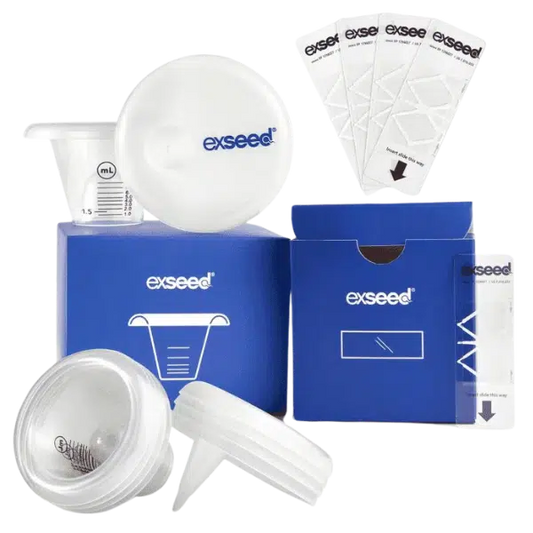

Pick The Right Male Fertility Test Kit For Your Situation
-

2-Test Kit
Check your baseline fertility status. Test once now, once after making changes. Perfect for first-time users wanting quick answers about their reproductive health.
-

5-Test Kit
Track your fertility journey month by month. See how lifestyle changes affect your results. Ideal when actively trying to conceive.
-

10-Test Kit
Complete monitoring throughout conception attempts. Best value per test. Essential for couples needing regular fertility insights.
-
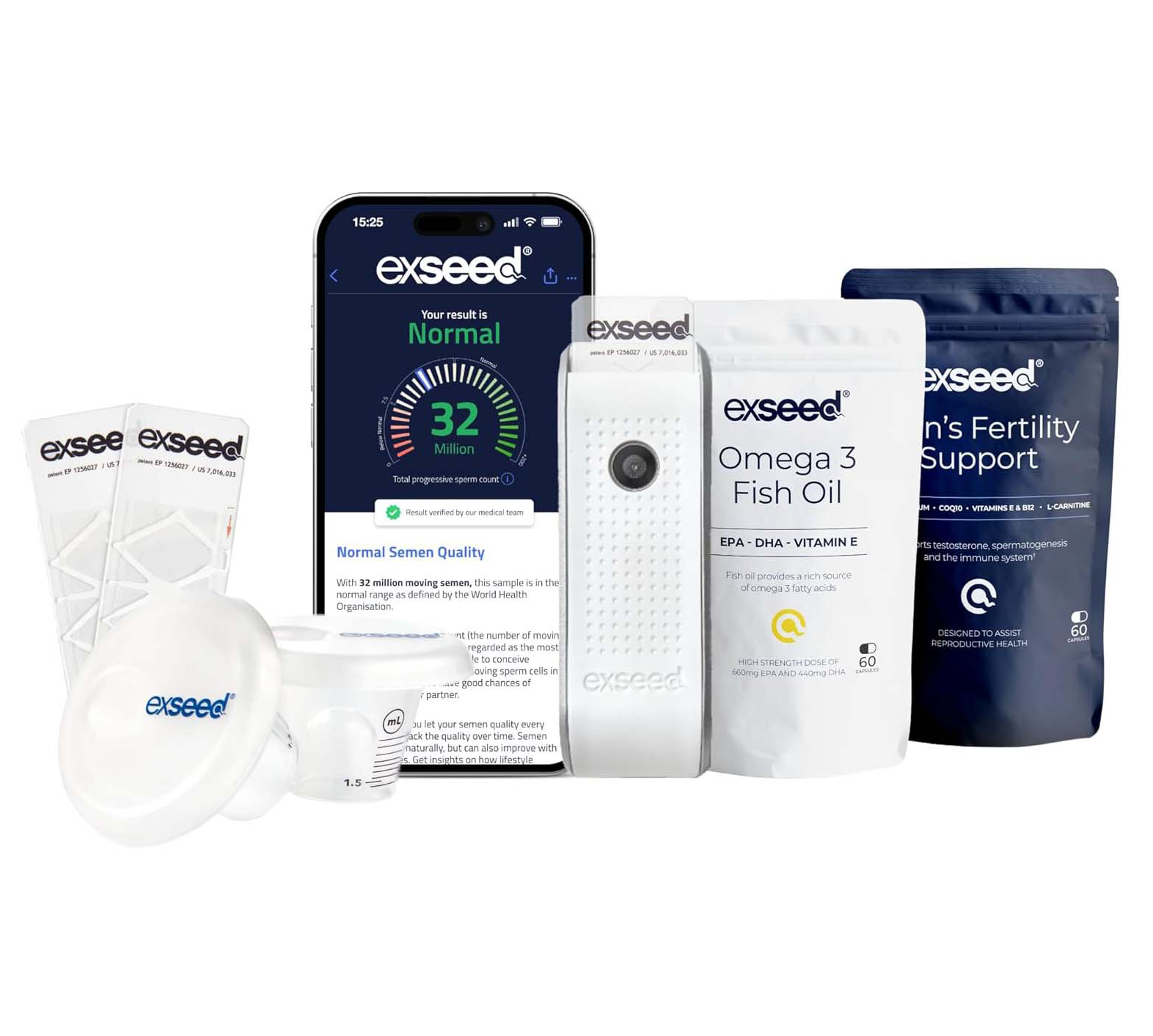
Male Fertility Test-and-Progress
Includes testing plus personalised improvement plan. Get expert guidance based on your specific results.
-

Refill Kits
Keep monitoring without buying new devices. Same accurate results, lower cost for ongoing tracking.


What does a male fertility test measure?
A male fertility test assesses the key parameters used by clinicians to evaluate sperm health. The gold standard is Total Motile Sperm Count (TMSC) — the total number of forward-swimming sperm in a single ejaculate. It combines three measurements:
Sperm concentration: The number of sperm cells per millilitre of semen. WHO guidelines define normal as more than 15 million sperm/mL. A result below this is called oligospermia, and the absence of sperm entirely is azoospermia.
Sperm motility: Specifically progressive motility — the percentage of sperm swimming in a forward direction. WHO defines normal as more than 32%. Below this threshold is called asthenozoospermia.
Semen volume: The total fluid ejaculated. Normal is more than 1.5mL. Consistently low volume (hypospermia) can reduce the total number of sperm available to reach the egg.
Basic home sperm strip tests (SP-10 lateral flow tests) only indicate whether concentration is above or below a cut-off — they give no motility data, no volume measurement, and no TMSC. TMSC is the number fertility clinicians actually use.

Why test your fertility at home?
Around 1 in 7 couples in the UK experience difficulty conceiving, with male factors contributing to roughly half of all cases. Testing early gives you answers before months of trying without results.
The ExSeed male fertility test kit does everything a clinic sperm analysis does measures concentration, motility, and volume to WHO 5th edition standards without requiring a clinic appointment, without sending a sample away, and without the variability that comes from sample degradation in transit. Results appear in the app within 15 minutes, reviewed by an in-house fertility expert.
Independently validated by UK NEQAS external quality assurance. Trusted by 65,000+ men
How to improve your results?
Your TMSC score can change. Sperm takes approximately 74 days to develop, which means lifestyle changes made today can measurably improve results within three months. The ExSeed app includes a personalised programme covering sleep, diet, exercise, heat exposure, and supplementation — built around your specific test results, not generic advice.
Retesting every 3 months lets you track whether changes are working before committing to fertility treatment.