Sober October challenges people to go alcohol-free for the 31 days of October. In 2026, Alcohol Change UK is the campaign’s official charity partner, using the challenge to raise funds and reduce alcohol harm.
For men thinking about fertility, the month can also be a useful opportunity to look at how drinking fits into sleep, diet, sexual health and sperm production. What it cannot offer is a guaranteed fertility “reset” in four weeks.
What you may notice during an alcohol-free month
The experience depends on how much you usually drink, your health and the other changes you make. Some people notice that they avoid hangovers, sleep more consistently, consume fewer liquid calories or feel more in control of their routine.
A small prospective study of moderate to heavy drinkers who abstained for one month found improvements in several metabolic and cardiovascular markers, including blood pressure, weight and insulin resistance. This was not a fertility study, so its findings should not be used as proof that sperm quality improves within the same period.
Other reported benefits from month-long alcohol challenges often come from self-reported surveys. They can be encouraging, but they do not predict what every participant will experience.
What happens to sperm during those 31 days?
The testes produce sperm continuously, but each sperm cell takes roughly 64 to 74 days to develop. It then undergoes further maturation and transport. Sperm present at the end of October therefore began developing before the challenge started.
This timing matters. An alcohol-free month may improve the environment in which developing sperm are produced, especially for someone moving away from frequent or heavy drinking. However, 31 days does not cover a complete development cycle.
For this reason, avoid treating a single test on 31 October as a final verdict on whether Sober October “worked.” A more useful approach is to consider October the first month of a 90-day plan.
Can sperm count or motility improve?
Research on alcohol and male fertility has associated heavy and habitual consumption with poorer semen quality in some studies. Reviews find the clearest concerns around frequent or higher intake, while evidence about occasional or moderate drinking remains mixed.
Reducing a high intake removes one possible source of reproductive stress. It may support healthier sperm production over time, but the size of any change will vary. Sperm count and motility are also affected by illness, fever, abstinence time, medication, smoking, weight, heat exposure and natural variation between samples.
Current evidence does not show that every man will have a higher sperm count or motility result after one alcohol-free month.
What about testosterone and sexual health?
Chronic heavy drinking can interfere with reproductive hormones and testicular function. It may also contribute to reduced libido or erectile difficulties. Cutting down can be beneficial when alcohol is part of the problem, but testosterone does not follow a universal week-by-week recovery schedule.
Do not assume that low energy or low libido automatically means low testosterone. Sleep, stress, relationships, mental health, medication and several medical conditions can cause similar symptoms. Persistent symptoms deserve proper assessment.
A practical 31-day plan
Before October
Record your normal weekly intake honestly. Use the ABV and serving size to calculate units rather than counting glasses. Decide what you will drink at home, in pubs and at social events.
If you want a sperm-health baseline, test before making major lifestyle changes. Follow the instructions carefully and record the abstinence period so future results are easier to compare. Our guide to male fertility test types and reliability explains the available options.
During October
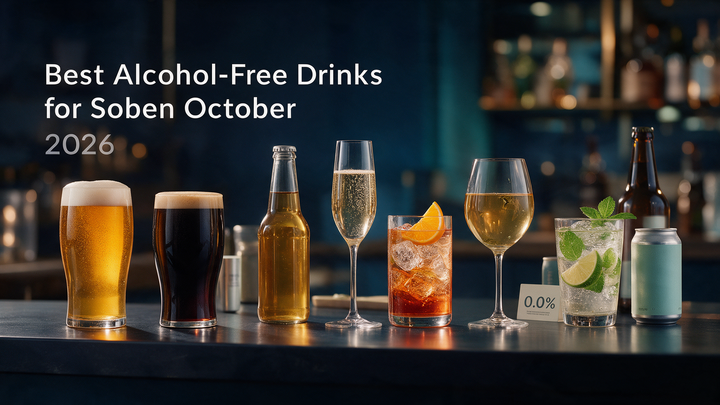
- Replace the ritual as well as the drink. Choose a 0.0% option, sparkling water, tonic with citrus or another grown-up alternative.
- Protect your sleep routine. Removing alcohol will not help if late nights continue to reduce sleep.
- Eat normally rather than trying to “detox.” A balanced diet is more useful than restrictive cleanses or fertility-labelled drinks.
- Exercise regularly, but avoid suddenly starting an extreme programme that you cannot maintain.
- Note changes in sleep, energy, mood and cravings without expecting a perfect upward line.
Our guide to the best alcohol-free drinks for Sober October can help you find practical replacements.
After October
Review what changed and decide what to keep. You might continue alcohol-free, set a lower weekly limit or preserve several drink-free days. If you return to drinking, the NHS advises no more than 14 units a week on a regular basis, spread across three or more days.
Continue the wider plan through November and December. That gives developing sperm more time under the new routine.
Turning 31 days into a 90-day sperm-health plan
Alcohol is only one factor, so use the next three months to focus on changes with broader health value:
- Stay within UK low-risk drinking guidance or remain alcohol-free.
- Stop smoking and avoid recreational drugs and anabolic steroids.
- Aim for regular sleep.
- Maintain a healthy, sustainable weight.
- Avoid prolonged heat around the testicles.
- Eat a varied diet with vegetables, fruit, whole grains, protein and healthy fats.
- Follow medical advice for existing conditions and prescribed medication.
Read the evidence-based rules for improving male fertility for a broader review of lifestyle changes.
You can also use our 10 healthy habits for male fertility as a practical checklist for the rest of the 90-day period.
When should you test again?
Semen results naturally vary, so comparable conditions matter. If you establish a baseline before October, a follow-up approximately three months later is more biologically meaningful than an immediate end-of-month comparison.
Use the same testing method and follow the recommended abstinence period each time. If a result is outside the expected range, repeat testing and seek clinical advice rather than relying on one measurement. The NHS usually repeats an abnormal laboratory semen analysis after around three months.
Sober October is not safe for everyone without support
If you drink heavily most days or experience symptoms such as shaking, sweating, nausea or anxiety when you stop, seek medical advice before attempting an alcohol-free month. Sudden withdrawal can be dangerous for people who are dependent on alcohol.
A GP or alcohol support service can help you reduce safely. Sober October should never replace treatment for alcohol dependence.
The bottom line
Thirty-one days without alcohol can help you examine your drinking, establish new routines and remove one potentially harmful exposure. It cannot guarantee better sperm or complete a full sperm-development cycle.
Treat Sober October as month one of a 90-day plan. If you want to understand your starting point and monitor change over time, the ExSeed Home Sperm Test measures sperm concentration and motility and calculates Total Motile Sperm Count at home.
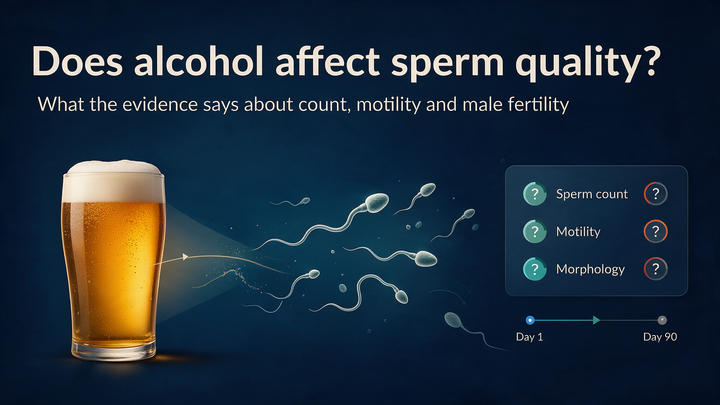
For a detailed review of the research, read Does Alcohol Affect Sperm Quality and Male Fertility?