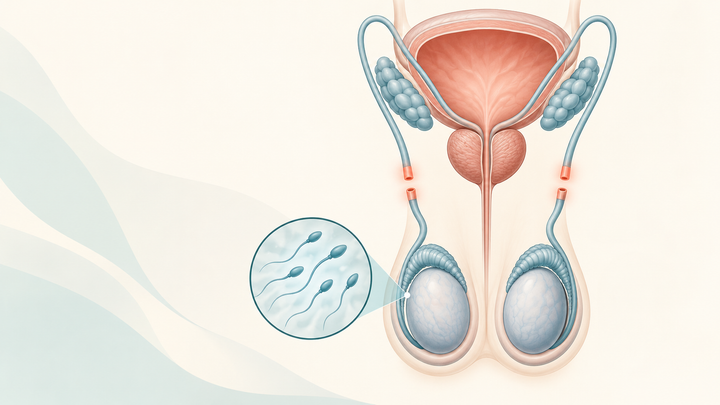
International Men’s Day, on 19 November, is an opportunity to talk about the health and wellbeing of men and boys. That conversation should include reproductive health: understanding sperm health, getting support when conception takes longer than expected, and feeling comfortable asking questions about fertility.
Whether fatherhood is part of your plans now, something you are considering for the future, or a subject you are unsure about, you deserve clear information about your reproductive health.
The global theme for International Men’s Day 2026 is “The Future Is Everyone”. For fertility care, that offers a useful starting point: making sure men are included, informed and supported.
Why male fertility deserves attention
Fertility difficulties are common. According to the World Health Organization, approximately one in six adults worldwide experiences infertility during their lifetime. That figure covers infertility overall, rather than male infertility specifically.
When a couple is having difficulty conceiving, either partner—or both—may have factors contributing to the problem. Investigating male reproductive health is therefore an essential part of understanding what is happening.
The WHO’s guideline on infertility care describes male fertility assessment as a process that brings together medical history, physical examination and semen analysis. Each provides information that helps clinicians decide whether further investigation or treatment is needed.
For couples trying to conceive, this means both partners should have a place in the conversation from the beginning. Attending appointments, asking questions and discussing results can help make fertility care a shared responsibility.
What can sperm testing tell you?
A semen analysis examines characteristics of a semen sample that can help assess male reproductive function. Depending on the test, these may include:
- Sperm concentration: how many sperm are present in each millilitre of semen.
- Sperm motility: how sperm move, including their ability to move forwards.
- Semen volume: the amount of fluid in the sample.
- Sperm morphology: the shape and structure of sperm, assessed through laboratory analysis.
These measurements provide useful information, but they need context. Results within reference ranges do not guarantee pregnancy, and results outside those ranges do not automatically mean someone cannot conceive. Sperm parameters can also vary between samples.
The WHO’s infertility guideline explains why semen analysis should be interpreted alongside medical history and examination. A clinician may recommend further testing or a repeat sample, depending on the findings.
Where does home sperm testing fit?
Home testing can offer a private, convenient way to learn about certain sperm parameters.
The ExSeed Home Sperm Test assesses sperm concentration, motility, semen volume and total motile sperm count using a smartphone and the ExSeed device. It can also help users track changes in the measurements it assesses.
It does not provide a complete fertility assessment or replace a clinical investigation. ExSeed’s instructions for use explain these limits. If you are having difficulty conceiving or are concerned about a result, speak to a healthcare professional.
Make space for the emotional side of fertility
Trying for a baby can bring hope, uncertainty and disappointment, sometimes within the same month. Men need room to talk about their own experience as well as support a partner.
You might feel anxious about testing, unsure how to discuss a result, or worried about what fertility difficulties could mean for your future. You may also feel pressure to stay positive when you are struggling.
Clinical guidance from the American Society for Reproductive Medicine recognises that infertility-related distress can contribute to difficulties with sexual function. Changes in sex drive, erections or enjoyment of sex deserve a conversation with a clinician.
A useful first step may be telling someone what you need: a listening ear, help finding information, or company at an appointment. If fertility worries are affecting your daily life or relationship, ask your healthcare provider about counselling or other support.
Our guide to stress and male fertility explores ways to look after your wellbeing during this process. Emotional support matters regardless of whether it changes a fertility outcome.
When should you seek medical advice?
You do not need to wait for an awareness day to ask for help.
In the UK, the NHS advises seeing a GP if you have not conceived after a year of regular unprotected sex. Seek advice sooner if the partner who would become pregnant is aged 36 or over, or if either partner has a reason to be concerned about fertility, such as previous cancer treatment or a suspected sexually transmitted infection.
Recommendations and referral pathways vary between countries, so check with a local healthcare professional if you live elsewhere.
Tell your clinician about any medicines, supplements, testosterone treatment or anabolic steroid use. ASRM guidance explains that testosterone taken as treatment can suppress sperm production. If you are taking prescribed medication, discuss your fertility plans with the prescriber before making changes.
You can also seek advice before trying to conceive if you have questions about your medical history or future family plans.
A practical way to mark International Men’s Day
International Men’s Day can be a prompt to take one useful step towards understanding your reproductive health.
That might mean starting a conversation with your partner about future family plans. It might mean booking an appointment you have been putting off, learning what a sperm test measures, or telling someone that trying to conceive has been harder than you expected.
If you choose to explore at-home sperm testing with ExSeed, use the information as a starting point for understanding your sperm health and deciding what to discuss with a professional.
Whatever your plans for parenthood, your questions deserve attention—and you deserve support in finding the answers.