Testicular health and fertility are subjects of vital concern to men and couples aspiring to start a family. Among the various factors that can impact male fertility, testicular torsion (TT) has emerged as a significant topic of interest. TT is an uncommon yet critical urological emergency that mainly affects children and adolescents. In this blog, we delve into the relationship between testicular torsion and male infertility, unraveling its complexities and addressing commonly asked questions.
Understanding Testicular Torsion
Testicular torsion involves the twisting of the spermatic cord that supplies blood to the testicle. This condition can lead to ischemia (restricted blood flow) and potential damage to the testicle if not promptly treated. TT often presents as sudden and severe testicular pain and swelling and requires urgent medical attention to prevent permanent damage.
Effects of Testicular Torsion on Male Fertility
Research has explored whether TT, particularly when experienced at an early age, has long-term implications for male fertility. A comprehensive study investigated the impact of unilateral testicular torsion on adult male fertility. It found that the onset of TT during childhood did not significantly affect fertility in adulthood. In fact, the study observed a relatively high pregnancy rate among couples where the male partner had experienced TT during childhood. This intriguing discovery challenges some of the previously held beliefs regarding the link between TT and fertility.
Age Matters: The Role of Timing
One of the striking findings of the study was the influence of age at the time of TT on fertility outcomes. The research indicated that the pregnancy rate was higher among individuals who had experienced TT during childhood compared to those who experienced it during adolescence or adulthood. This suggests that the compensatory mechanisms within the unaffected testicle play a significant role in fertility preservation. As age at the time of TT increases, these compensatory abilities appear to diminish.
Preservation vs. Removal: Surgical Considerations
The study also shed light on the impact of surgical interventions on fertility. When TT occurs, prompt treatment is crucial. Surgical options include orchiectomy (removal of the affected testicle) or surgical repositioning (reversing the torsion and restoring blood flow). The research indicated that couples where the affected testicle was preserved had better fertility outcomes compared to those where orchiectomy was performed. This underscores the importance of considering preservation whenever possible, especially for individuals over the age of 18.
Clinical Implications
Understanding the relationship between TT and male fertility has several clinical implications:
- Urgent Treatment: Early intervention within 6 hours of TT onset is crucial to prevent irreversible damage.
- Diagnostic Accuracy: Color Doppler flow imaging (CDFI) is an effective tool for diagnosing TT and assessing blood flow.
- Preservation Priority: Whenever feasible, preserving the injured testicle can lead to better fertility outcomes.
- Age-Related Impact: Age at the time of TT plays a significant role in determining fertility status in adulthood.
The complex interplay between testicular torsion and male fertility continues to unfold through scientific research. The findings of recent studies challenge traditional assumptions, demonstrating that while early-life TT might not significantly impact fertility, age at the time of TT does influence fertility outcomes. This knowledge empowers medical professionals to make informed decisions and guide patients toward appropriate treatments. As we uncover more about the intricate relationship between TT and male fertility, individuals and couples can be better equipped to navigate these concerns with confidence.
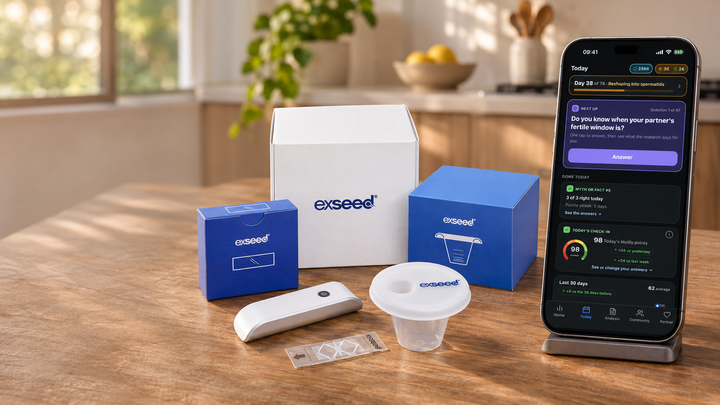
If you’d like to know if your sperm is healthy, one of the best indicators to predict a successful pregnancy from the male side is looking at Progressive Motile Sperm Count. This is the estimated total number of sperm cells that are swimming in a progressive motion in 1 ejaculate. The sperm check kit measures Progressive Motile Sperm Count, all without you needing to go to a clinic or send away your sperm sample in the mail.