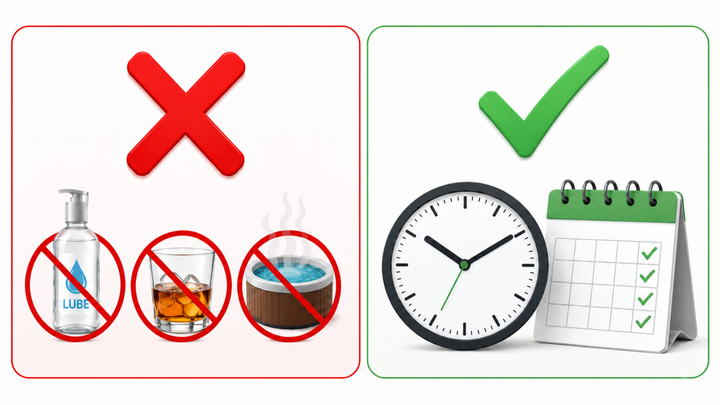
For men, self-care usually means the basics: the gym, more protein, better sleep, less drinking, managing stress, or finally booking that appointment you keep putting off.
All of that matters.
But real self-care has to go further than the obvious habits. It means paying attention to the signals you’d rather avoid: the tiredness you explain away, the stress you push through, the symptoms you minimise, the checks you delay because you feel fine.
This International Self-Care Day, the message is simple:
Self-care means checking what you usually ignore.
For many men, fertility is one of the most ignored areas of health. Sperm health, specifically.
Most men know their weight, their gym numbers, maybe even their testosterone level. Very few know anything about their sperm count, sperm motility, semen volume, or progressive motile sperm count.
That’s a problem. Sperm health isn’t just a fertility issue. It can be an important male health signal too.
What is International Self-Care Day?
International Self-Care Day falls on 24 July. The date is symbolic: self-care is something you can practise 24 hours a day, 7 days a week.
The World Health Organization defines self-care as the ability of individuals, families, and communities to promote health, prevent disease, maintain health, and cope with illness, with or without support from a health worker.
That definition matters for men. Self-care isn’t just recovery days, cold showers, supplements, or mental health posts. It’s prevention. It’s checking what’s going on inside your body before something becomes urgent.
For men, sperm health should be part of that conversation.
Men are taught to monitor everything except fertility
Men are often encouraged to track performance: steps, calories, gym progress, sleep scores, heart rate, protein intake, body fat, testosterone, blood pressure, cholesterol.
Sperm health rarely makes that list.
Most men don’t think about fertility until they’re actively trying for a baby. Even then, attention often falls on the female partner first. Ovulation tracking starts. Period apps get checked. Blood tests, scans, supplements, appointments, and lifestyle changes often begin on her side before anyone asks a simple question:
Has he tested his sperm health?
That delay matters.
You can’t see sperm count in the mirror. You can’t feel sperm motility. You can train regularly, eat well, have a healthy sex life, and still have no idea what your sperm health looks like.
That’s why sperm testing matters.
It gives men information they can’t guess.
Male fertility is not a side issue
Fertility gets treated like a women’s health topic. The numbers say otherwise.
According to the World Health Organization, infertility affects around 1 in 6 people of reproductive age during their lifetime. Male infertility can be linked to low or absent sperm levels, problems with semen ejection, or issues with sperm movement and shape.
Male factor infertility contributes to around half of infertility cases. Sperm health isn’t a small detail. It’s part of the main fertility picture.
For men, this matters for two reasons.
First, fertility is shared. Testing and investigation shouldn’t fall only on the female partner.
Second, men can act earlier. A sperm test cuts guesswork, gives couples a clearer starting point, and helps men understand their role in conception before months of stress build up.
If you want to understand the basics, read this guide on why male fertility testing is important.
Self-care for men should include uncomfortable checks
A lot of men only think about health checks when something feels wrong.
But prevention is part of self-care.
You don’t check blood pressure only after a heart scare. You don’t check cholesterol only after a diagnosis. You don’t go to the dentist only when the pain becomes unbearable.
Sperm health deserves the same mindset.
A sperm test isn’t only for men who’ve been trying to conceive for a long time. It can also help if you:
- Want children in the future
- Are actively trying to conceive
- Are over 35 and thinking about fertility
- Take testosterone or anabolic steroids
- Have had testicular pain, injury, surgery, or infection
- Smoke, vape, drink heavily, or use recreational drugs
- Use saunas, hot tubs, or have regular heat exposure
- Have high stress or poor sleep
- Simply want to understand your reproductive health better
That’s what makes sperm testing a practical form of male self-care.
It gives you a starting point.
You can learn more in this guide to the benefits of at-home sperm testing.
Sperm health is more than fertility
When men hear “sperm test”, they think pregnancy. That makes sense: sperm health plays a direct role in conception. Semen parameters such as sperm concentration, sperm motility, semen volume, and progressive motile sperm count show whether enough sperm are present and whether they’re moving effectively.
But sperm health may also reflect wider male health.
Stress, poor sleep, smoking, alcohol, excess heat, obesity, certain medications, anabolic steroid use, and testosterone replacement therapy can all affect sperm production and quality.
This doesn’t mean sperm health is a full-body health check. It doesn’t replace a doctor, blood tests, hormone testing, or regular medical screening.
But it can act as a useful biomarker: a measurable signal that tells you something useful about what’s happening inside the body. Sperm health connects to hormones, testicular function, lifestyle, oxidative stress, reproductive potential, and overall wellbeing.
Research increasingly supports this connection. One study published in Fertility and Sterility found a relationship between semen production and medical comorbidity, suggesting that semen analysis may represent a biomarker of overall male health. A large 2025 study in Human Reproduction also found that better semen quality was associated with longer life expectancy. That doesn’t mean a sperm test can predict lifespan, though.
The practical point is simple:
Sperm health can be a useful male health signal that something may be worth paying attention to.
For more on this, read how sperm health connects to overall health and why sperm health may matter as a male health biomarker.
What does a sperm test actually measure?
A semen analysis usually looks at several key sperm health markers.
Sperm concentration measures how many sperm are present in each millilitre of semen.
Semen volume measures the amount of semen in the sample.
Sperm motility shows how well sperm are moving.
Progressive motile sperm count combines volume, concentration, and progressive motility to estimate the number of sperm moving progressively in the sample.
These markers matter because male fertility isn’t just about having sperm. It’s also about how many sperm are present, how many are moving, and whether there are enough motile sperm to support the chance of conception.
A single sperm test doesn’t define a man’s fertility forever. Sperm production changes over time, and results can vary due to illness, stress, heat exposure, sleep, abstinence time, alcohol, smoking, medication, and lifestyle.
That’s why sperm testing should be seen as a snapshot, not a verdict.
But a snapshot is still useful. It can show whether things look within an expected range, whether retesting makes sense, or whether it may be worth speaking with a healthcare professional.
For more detail, read what is measured in a semen analysis, this sperm motility guide, and this guide to sperm volume.
Why men delay sperm testing
Many men delay fertility testing because they don’t think it applies to them yet.
They may think:
- “I’m not trying for a baby right now.”
- “We have only just started trying.”
- “I feel healthy, so I’m probably fine.”
- “My partner is already tracking everything.”
- “I do not want to know unless there is a problem.”
- “A sperm test feels awkward.”
- “Fertility testing is something couples do later.”
But waiting carries a real cost.
For couples trying to conceive, women often start investigating first: ovulation tests, cycle tracking, blood tests, scans, appointments, supplements, lifestyle changes. Month after month, women end up carrying the emotional and medical load while male fertility stays unchecked.
That imbalance isn’t fair.
It isn’t practical either.
Testing earlier helps men take responsibility for their side of the fertility picture. It can reduce guesswork, support better decisions, and help couples move forward with more clarity.
For men who are not currently trying to conceive, testing can still be useful. A strong result can offer reassurance. A lower-than-expected result can create an opportunity to make lifestyle changes, repeat testing, or seek medical advice before time pressure becomes part of the equation.
Useful next reads include:
- Signs of low sperm count
- Stress and male fertility
- How sleep affects fertility
- Testosterone replacement therapy and male fertility
- Do saunas damage sperm?
Why men ignore sperm health
Men don’t ignore sperm health because they don’t care.
They ignore it because the topic feels private, awkward, or uncomfortable. Some worry a low result will affect how they see themselves. Others don’t know testing exists outside a clinic. Many assume fertility is mainly a female issue because most fertility content is aimed at women.
There’s also a wider cultural issue.
Men are often encouraged to treat health concerns as something to deal with only when they become serious. That mindset makes preventive health feel unnecessary or even embarrassing.
But ignoring a health marker doesn’t make it less important.
Checking sperm health isn’t about panic. It isn’t about blame. It isn’t about masculinity.
It’s about information.
And information is one of the most practical forms of self-care.
Men’s self-care needs to become more honest
International Self-Care Day is a useful reminder that men’s self-care shouldn’t stop at comfortable habits.
Self-care can mean exercise, sleep, nutrition, rest, and time away from stress. But it also means the checks, conversations, and decisions that protect your future.
For men, that might mean:
- Booking the appointment you have been avoiding
- Talking honestly about stress, anxiety, or low mood
- Checking testosterone levels if you have symptoms
- Taking testicular pain or changes seriously
- Looking at alcohol, smoking, vaping, diet, and exercise honestly
- Asking whether your lifestyle is helping or harming your fertility
- Checking your sperm health
This matters most if you are trying for a baby, planning a family in the future, taking testosterone, using anabolic steroids, recovering from illness, or simply curious about your reproductive health.
Self-care doesn’t have to be dramatic.
Sometimes it’s one small action that gives you more clarity than you had yesterday.
For practical advice, read how to improve sperm health and 7 ways to improve sperm.
A message for men this International Self-Care Day
This International Self-Care Day, ask yourself:
What am I avoiding because I do not want to know?
That question isn’t meant to create fear. It’s meant to create awareness.
Because the thing you ignore is often the thing that keeps creating uncertainty.
For many men, sperm health is one of those hidden areas. It’s rarely discussed, rarely tested early, and usually only considered once a couple is already under pressure.
That needs to change.
Sperm health is part of men’s health.
Male fertility is part of fertility.
Testing isn’t something to be embarrassed about. It’s a responsible, proactive step for any man who wants to understand his body better.
Self-care means rest.
Self-care means movement.
Self-care means boundaries.
Self-care means asking for help.
And sometimes, self-care means checking the health marker you’ve been ignoring.
This International Self-Care Day, make sperm health part of the conversation.
FAQ: Men’s self-care, sperm health and male fertility testing
Why should men think about sperm health as part of self-care?
Sperm health gives men useful information about their reproductive health before pressure, confusion, or months of trying to conceive build up.
Self-care isn’t only about feeling better today. It’s also about checking the signals men often ignore.
Is sperm health only important when trying for a baby?
No. Sperm health is most directly linked to fertility, but it can also reflect wider lifestyle and health factors such as stress, sleep, alcohol, smoking, heat exposure, weight, hormones, and some medications.
A sperm test isn’t a full health check, but it can be a useful male health marker.
What does a sperm test measure?
A sperm test usually looks at key semen parameters such as sperm concentration, semen volume, sperm motility, and progressive motile sperm count.
These markers show how many sperm are present, how well they’re moving, and whether the sample contains enough motile sperm to support the chance of conception.
Can sperm health change over time?
Yes. Sperm health can change due to illness, stress, sleep, heat, alcohol, smoking, diet, exercise, medications, and abstinence time before testing.
That’s why one result should be seen as a snapshot, not a permanent verdict.
When should a man consider testing his sperm health?
A man may want to consider sperm testing if he is actively trying to conceive, planning a family in the future, has been exposed to fertility risk factors, is taking testosterone or anabolic steroids, has had testicular issues, or simply wants a clearer picture of his reproductive health.
Does a low sperm result mean a man is infertile?
Not always. A low result doesn’t automatically mean a man can’t conceive.
Semen quality can vary, and lifestyle changes or medical support may help depending on the cause. If a result comes in lower than expected, it’s usually worth repeating the test and speaking with a healthcare professional.
Is at-home sperm testing accurate?
At-home sperm testing can be a convenient way to understand key sperm health markers from home.
The quality and accuracy depend on the test used, what it measures, and whether results are reviewed or supported by clinical guidance. Choose a test that clearly explains what it measures and when to seek medical advice.
Why do men often delay fertility testing?
Many men delay testing because fertility is often framed as a women’s health issue, or because sperm testing feels private, awkward, or unnecessary until there’s a problem.
But fertility is shared, and testing earlier can reduce guesswork for both partners.
Can lifestyle changes improve sperm health?
In some cases, yes. Sperm health may improve with healthier habits such as better sleep, regular exercise, stopping smoking, reducing alcohol, managing stress, avoiding excess heat, and improving nutrition.
Because sperm production takes time, changes may take a few months to show in results.
What is the main message for men on International Self-Care Day?
The main message is simple: self-care means checking what you usually ignore.
For many men, sperm health is one of those ignored areas. Testing isn’t about panic or blame. It’s about awareness, prevention, and taking responsibility for your health.